Copa Airlines
Optimizing the user experience of the most punctual airline in Latin America, through the strategy and interface for a headless CMS-based website.
challenge Description
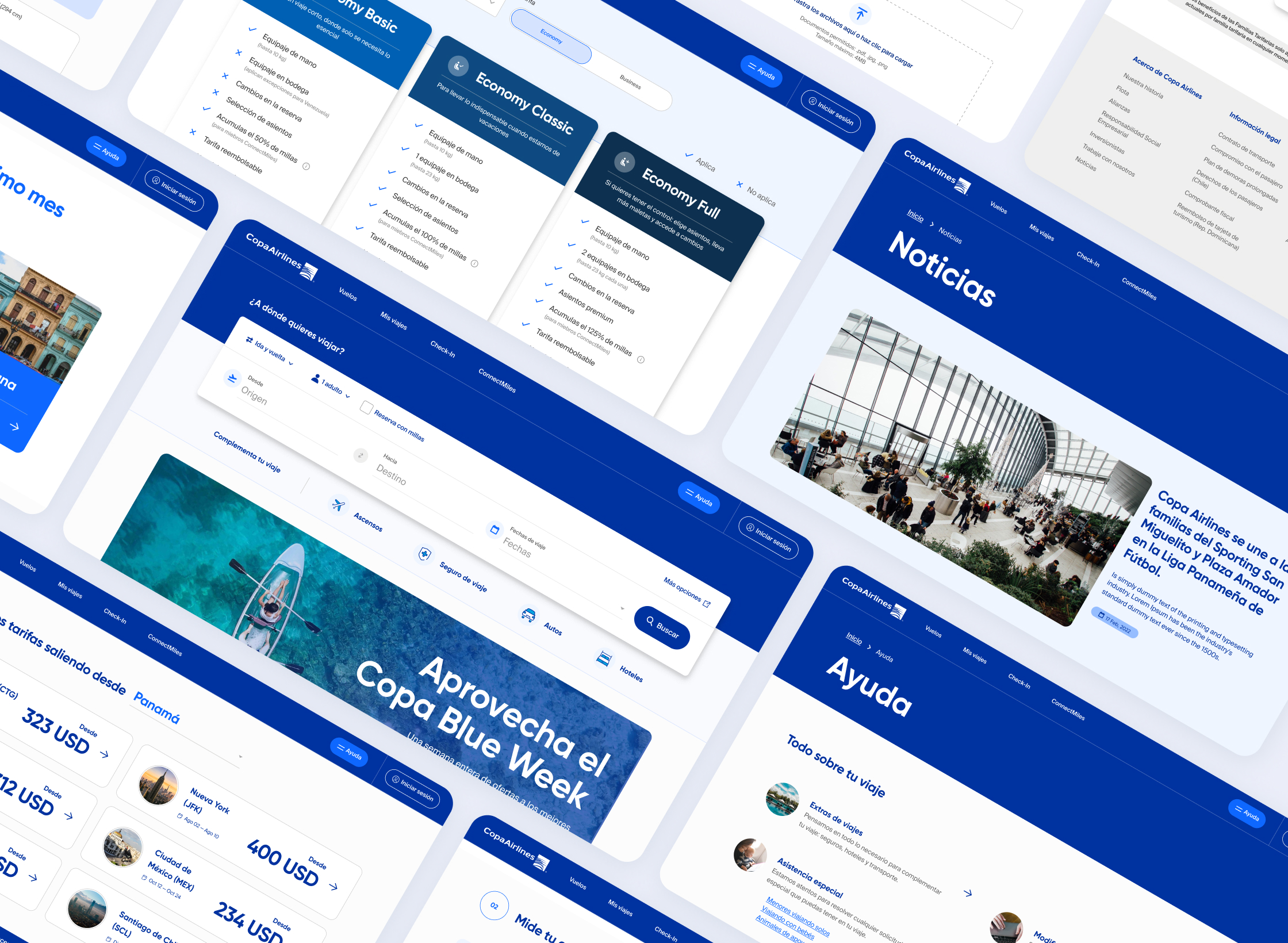
Consulting on user experience and redesign of visual interfaces for the renovation of the current website for Copa Airlines.
areas
UI Design
Date
2022
client
Copa Airlines is the international airline of Panama, ranked No. 7 of the most important airlines according to the number of passengers transported, by the Latin American and Caribbean Air Transport Association (ALTA). Recently, it was recognized as "the most punctual airline in Latin America" by Cirium, a leading company in aviation data analysis.
roles and team
• 1 Project Manager • 1 Research & Strategy consultant • 1 Content specialist • 2 UX Designers • 1 UI Designer (me) • 1 SEO specialist
tasks
• Consulting and Audit UI • Benchmarking • Workshops design for gathering information • Intervention and restructuring of the design system • Documentation of new components and modules/patterns • Creation of a manual of visual attributes based on brand • Construction of a custom handoff process • Design of interfaces for a new website based on a markup system in a headless cms
ACHIEVEMENTS
A deep look at the business.
With the consultancy applied from the different fronts, especially with an understanding from research and strategy, it was possible to identify the different needs for the business, which would make the project take a deeper approach, which would go beyond just a redesign of the website.
Mainly, issues such as the main objective of the website as one of Copa's digital channels were validated, but also the needs of the different areas of the company that were directly reflected on the site and how it could respond to each front, in a flexible way.
Placing the user at the base of the pyramid.
Reconstruction of the information architecture, detecting irrelevant content for the site or duplicates to discard and promoting the hierarchy of the most searched content. That is how we achieved a more solid architecture and effective user flows.

Conceptualize the design with the brand in mind.
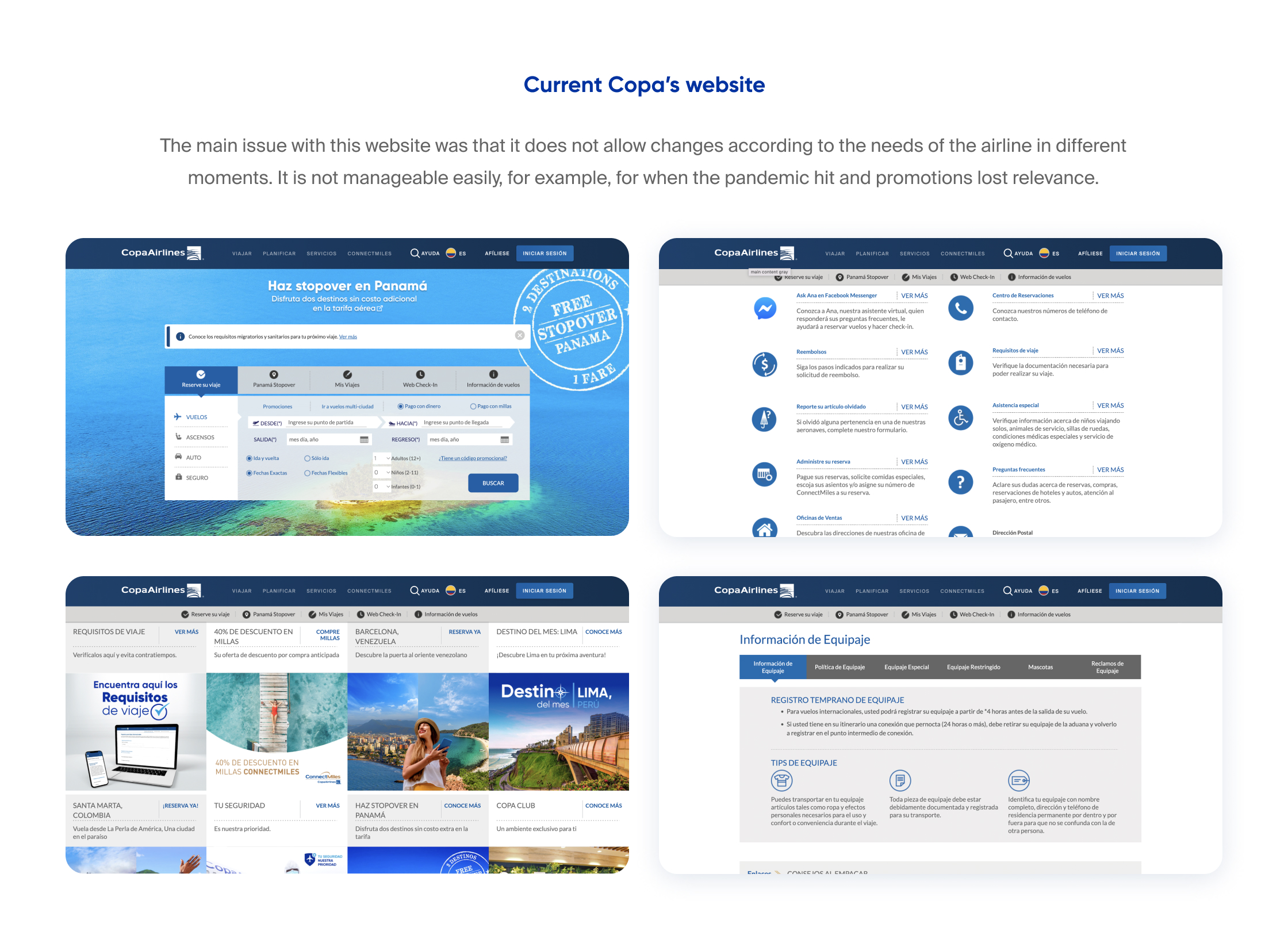
Carrying out an initial diagnosis of the previous website and a UI audit of the visual explorations that the client had carried out as an approach to the new look and feel (in the face of refreshment of the brand that was happening at the same time), yielded a series of factors that needed to be detailed.
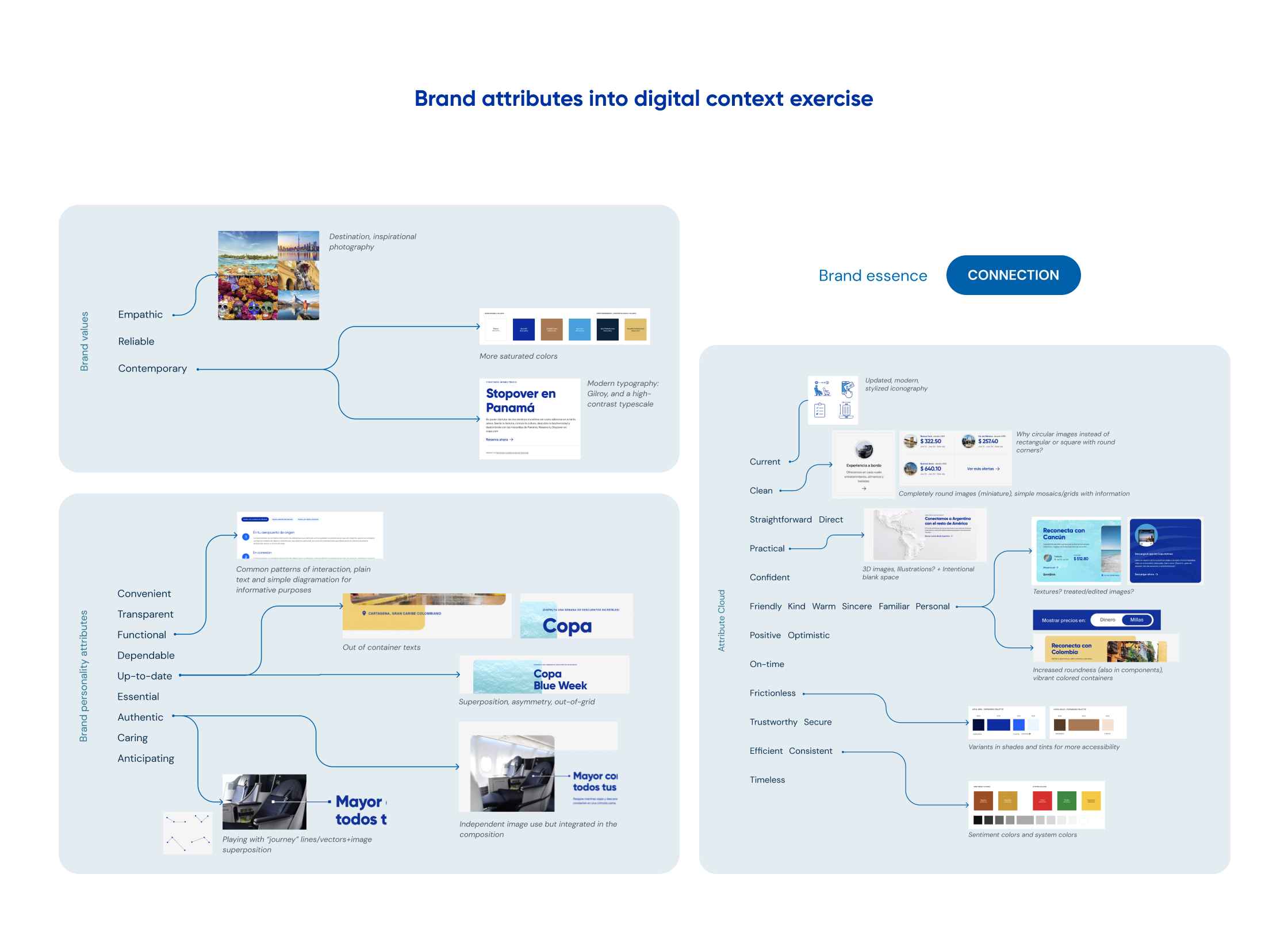
The first is that the explorations were of a very high level. There was no reason for every design decision that was being made in the web context. It was necessary to connect the design decisions with the previously established brand guidelines, brand values, experience pillars, and cloud of attributes, through the construction of a manual of visual attributes. With this, the rules for the construction of any new page in the future would not remain in the hands of the imagination but would be based on a series of rules that always respond to the principles of the organization.
The second is that there was a lot of progress at the design system level and it was necessary to guarantee consistency with the refreshment of the brand. This was a work of re-interpretation, but also of recognizing that we had to start from what existed. Therefore, analyzing the previous work in detail and intervening in it in a structured and minimally invasive way was one of the first steps when starting the design stages.
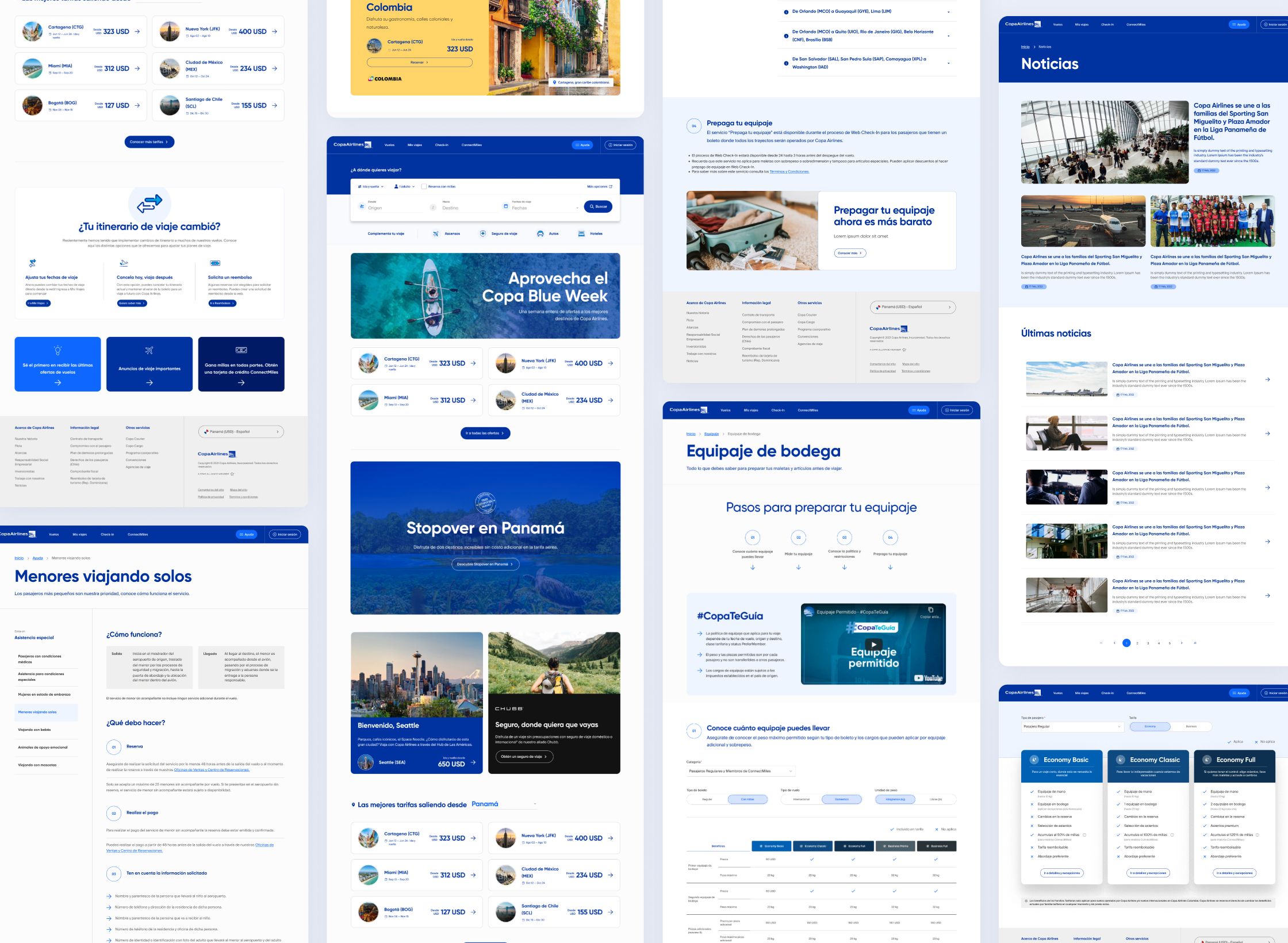
With the above, it was possible to establish a workflow for the design of user interfaces for the new website with a modular approach that would be standardized in a CMS with high content scalability.
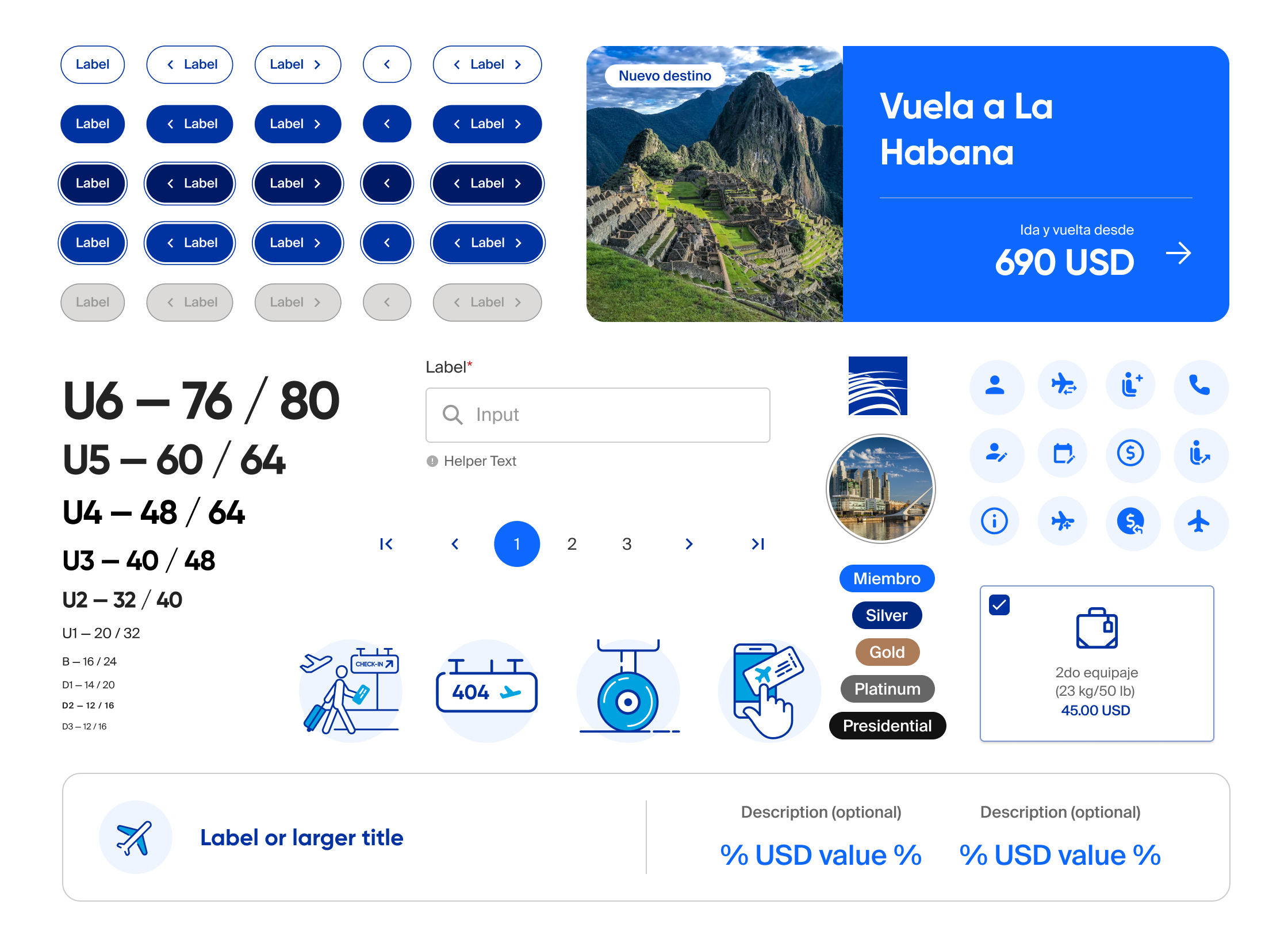
A design system where less is more.
We managed to establish limits in the implementation of components, standardizing their use and documenting from a technical perspective, but also from the need to which it responds. We think about modules and how to build for the CMS.
WHAT'S NEXT
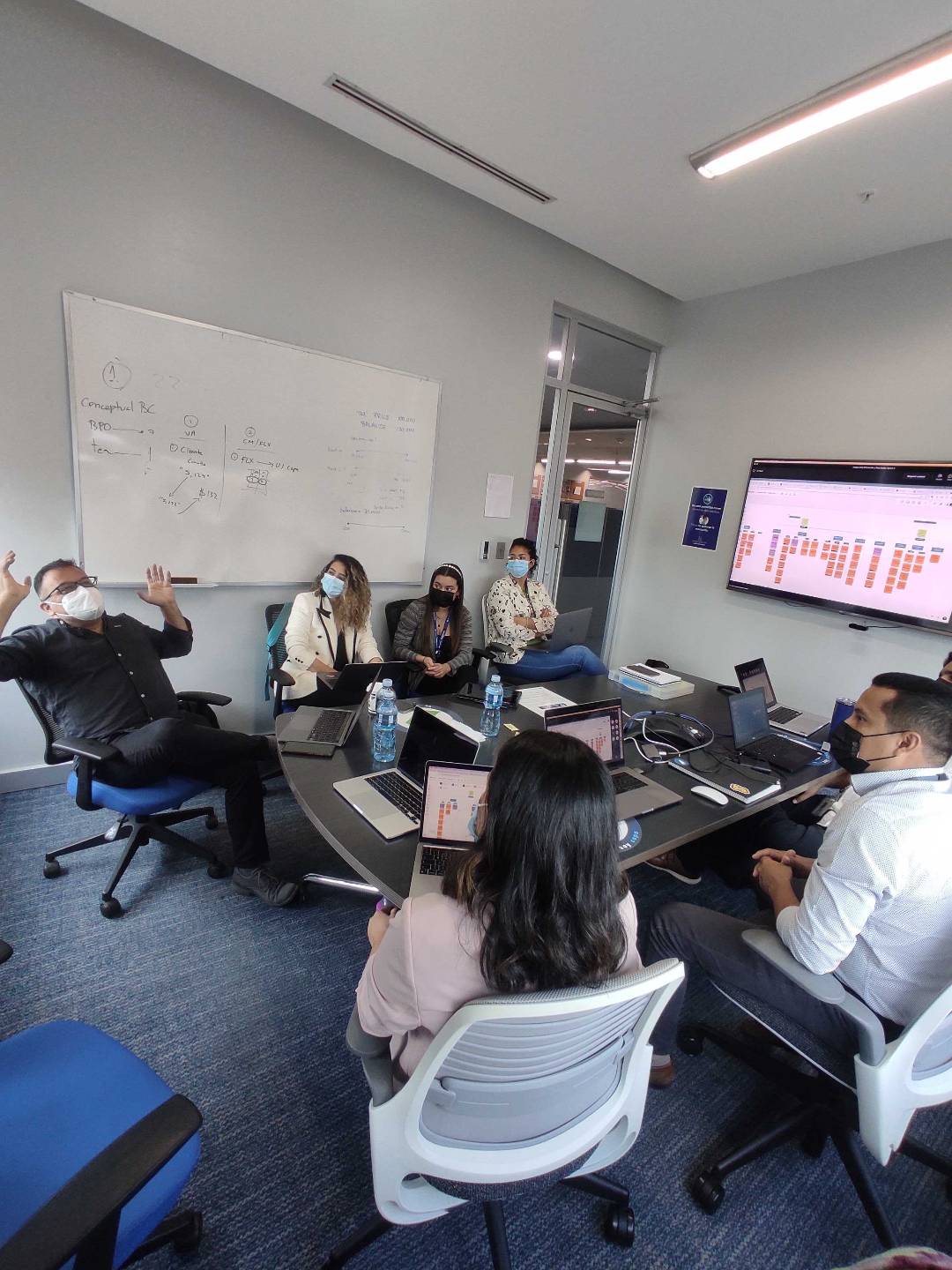
The client was able to see that the value delivered went far beyond support at the redesign level, so the need to expand the scope of the project was gradually seen. This generated an extension in the initially estimated times. The next thing is to continue working in a close and effective relationship with the client to continue generating value, especially in the most critical stages of the project, where there are already clear definitions that will allow fluid work between our team and the internal Copa team.
LIMITATIONS
• The delivery of the information by the client was given in an unstructured and gradual manner. This could lead to confusion, duplicate work and cross information. At this point, exhaustive documentation and the definition of single sources of truth in which all the information could be stored in one place for consultation by the entire team was vital.
• Reprocesses or delays due to change of direction of objectives by the client at the last minute. Delimiting tasks and realistically defining the scope regarding the new redirection allowed for clear deliverables and quick wins that were going to be possible in the remaining time, avoiding friction.
• Stakeholders at the internal level of the client were not aware of the process (even in late stages), so, at certain times, support in the socialization of progress and justification of the efforts/capabilities used was necessary. As well as quickly adapting to new definitions that arose from said sessions.